How Teachers Can Create Coloring Pages from Classroom Photos
PhotosStyle Team
5/10/2026
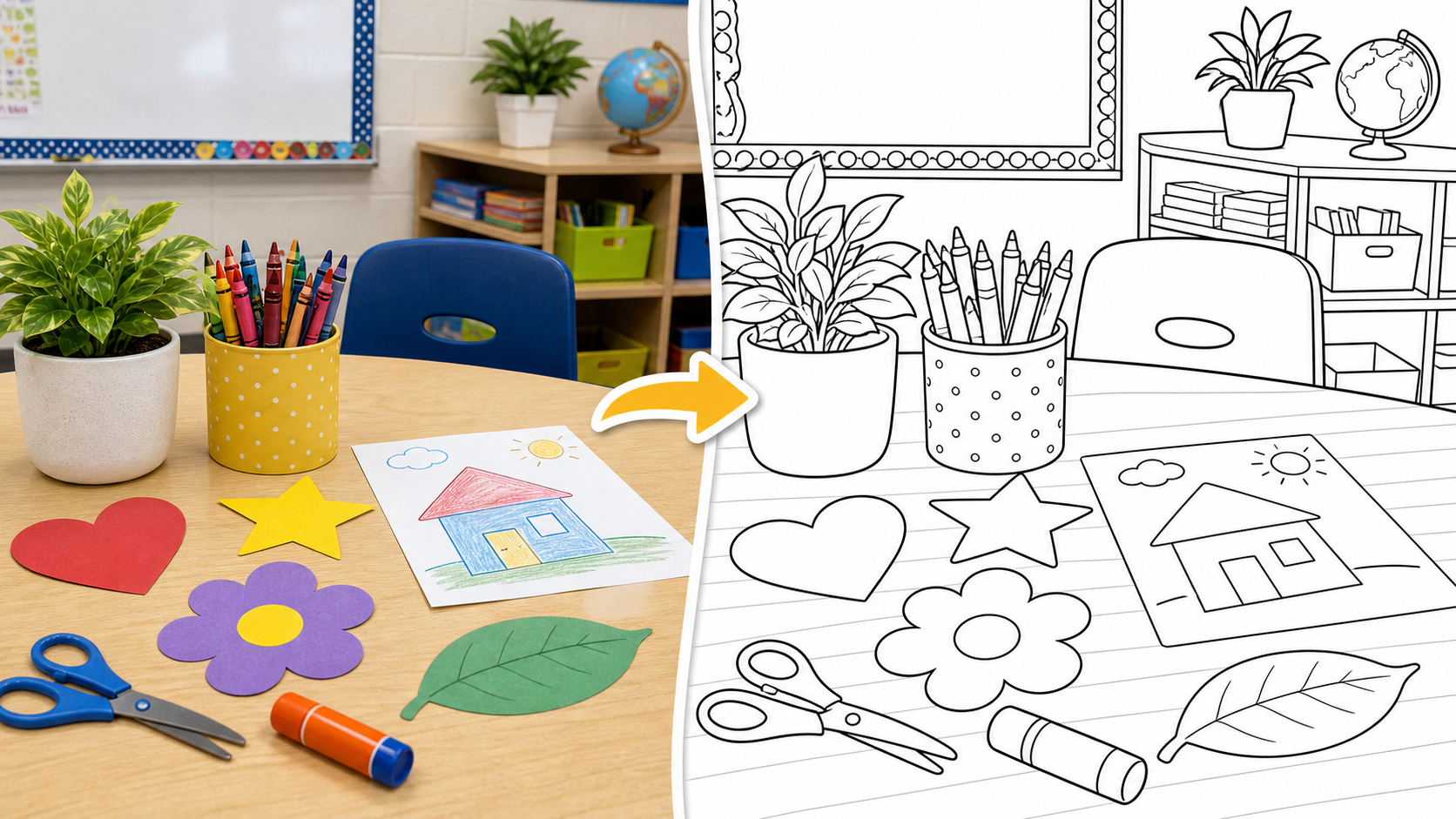
Teachers can use classroom photos to create coloring pages that feel personal and relevant. Instead of generic worksheets, students can color scenes from class projects, field trips, science activities, school events, reading corners, art displays, or shared memories from the year.
This is useful because the page already connects to something students experienced. A coloring worksheet made from a class garden project, a field trip stop, or a science model can become a reflection activity, a vocabulary exercise, or a calm early finisher task.
Turn a Classroom Photo into a Coloring Page
Example prompt used: "Convert this classroom craft photo into a printable coloring worksheet with simple shapes, crisp outlines, and no gray shading."
Classroom uses
Custom coloring pages can support lessons, celebrations, and quiet activities. They are useful for:
- morning work
- early finisher activities
- classroom memory books
- field trip follow-ups
- school event handouts
- art and writing prompts
- substitute teacher folders
- unit review packets
- seasonal bulletin board activities
Students can color the page, then write a sentence or short reflection about the activity. For younger students, the writing prompt might be "I remember..." or "My favorite part was..." For older students, the prompt can ask them to explain a process, label parts of an object, or connect the picture to a vocabulary word.
Pick safe, clear photos
Use photos that are appropriate to share and print. If students are visible, follow your school or district's photo policy. For many classrooms, object-based images are easier: projects, classroom displays, science materials, plants, books, art supplies, field trip locations, or student work without names.
Good classroom photos have:
- one clear subject
- bright lighting
- simple shapes
- limited background clutter
- enough contrast for outlines
- no sensitive student information
For privacy, many teachers prefer photos of objects rather than faces. A class pet, school garden, craft project, map, science tool, or building exterior can still create a meaningful worksheet.
Create a worksheet from one photo
- Choose a classroom image.
- Open Photo to Coloring Page.
- Upload the photo.
- Generate the line art page.
- Download and place it into your worksheet or print directly.
You can add writing prompts, vocabulary words, labels, or a short reflection question under the printed image. For example, a coloring page made from a plant photo could include "Label the stem, leaf, flower, and roots." A field trip page could include "Write three things you noticed."
Prompt examples for teachers
Prompts should make the output print-friendly and age appropriate. Try:
- Convert this classroom project photo into a simple coloring worksheet with clean outlines and no shading.
- Turn this field trip photo into a printable coloring page for elementary students, with large open spaces.
- Create a black-and-white line art worksheet from this science activity photo, keeping the main objects clear.
- Make this classroom display into a kid-friendly coloring page with simple shapes and a white background.
For younger students, add "thick outlines" and "few small details." For older students, add "include useful detail for labeling."
Lesson ideas
Custom classroom coloring pages can do more than fill time. They can support real learning when paired with a small task.
For science, create pages from plants, rocks, weather tools, simple machines, or class experiments. Students can color and label the parts. For social studies, convert photos from a local landmark, map activity, or classroom model. For language arts, use a page as a story prompt. Students can color the picture, then write what happened before or after the scene.
For classroom community, make pages from shared activities throughout the year. At the end of the year, each student can choose a page, color it, and write a memory. The class can combine the pages into a simple memory book.
Make a batch of classroom coloring pages
For a unit, event, or memory book, create several pages at once. Batch conversion is helpful when you want a consistent set for the whole class.
Make Coloring Worksheets from Multiple Photos
Batch sets are useful for:
- field trip packets
- seasonal classroom packs
- student project galleries
- year-end memory books
- substitute teacher activities
- unit review folders
- school event activity tables
When making a batch, keep the source photos similar. A set of bright object photos will usually look more consistent than a mix of dark classroom shots, distant group photos, and screenshots.
Keep pages age appropriate
Younger students usually need larger outlines and fewer small details. Older students can handle more complex scenes. If a page looks too busy, crop closer to the main object or pick a simpler photo.
For preschool and early elementary students, avoid tiny patterns, crowded shelves, and complex backgrounds. For upper elementary students, you can include more detail if the page is connected to observation, labeling, or writing.
Printing and classroom management tips
Print one test page before making a class set. If students will use crayons, regular printer paper is fine. If they will use markers, thicker paper helps prevent bleed-through. For centers, place pages in a folder by theme so students can choose independently.
If the activity includes writing, leave enough white space below the image. A coloring page can become a worksheet simply by adding a prompt, word bank, or label lines.
FAQ
Can teachers use student photos?
Only if your school policy and family permissions allow it. When unsure, use object photos, student work without names, or classroom materials instead.
What photos work best for worksheets?
Simple, bright photos with one main subject. Science objects, art projects, classroom pets, books, and field trip locations usually work well.
Can I make pages for a whole class?
Yes. Use batch conversion to create a consistent set, then print the strongest pages. Review each page before distributing it.
Can coloring pages support learning?
Yes. Add labels, vocabulary, writing prompts, or reflection questions so the activity connects to the lesson.